
Completing the first draft of your novel is an incredible feat in itself – so, please spend some time celebrating your amazing accomplishment! Congratulations, you are, officially, a writer. And to enhance that title, you’ve achieved something many are never brave enough to try – you have written an entire book.
Once your celebratory activities are done, it’s time to focus on the editorial phases of your author journey. While each project is unique, and will undoubtedly follow its own path from creation to publication, a basic framework for the editorial passes you should expect to put your manuscript through tends to include:
Step 1 = Alpha reading – someone, usually a trusted relative or friend, reads your first draft and offers feedback on major aspects of it (such as plot, character, setting, etc.) to support your developmental edit.
Step 2 = Developmental edit 1 – utilising relevant feedback provided by your alpha reader(s), you can then begin restructuring your novel to ensure that major elements of it align with the story you want to tell. For instance, fixing plot holes and developing character arcs.
Step 3 = Beta reading – a beta reader offers a crucial opportunity to test the reception of book with your potential audience. A beta reader can either offer specific feedback based on questions you’ve asked them, or they’ll share their opinion on several areas of your novel (from spelling errors and editorial suggestions, to narrative pacing and plot twists).
Step 4 = Developmental edit 2 – at this point, you may wish to incorporate some of your beta readers’ recommendations to enhance your novel. Alternatively, some authors prefer to pass their manuscript to a professional editor at this stage, to receive experienced, detailed feedback on their overall story; along with advice as to how best to incorporate beta reader feedback. (Please note that some writers might end up sending their manuscript to beta readers after their second developmental edit instead!)
Step 5 = Copy edit – when you’re happy with your story’s structure, plot, and character development, it’s time to move on to the copy edit. A copy edit focuses on enhancing your manuscript in a myriad of ways, including an assessment of consistency (in style, storylines, settings, scenes, etc.) throughout the story. It’s highly recommended that authors receive professional support from a qualified copy editor at this phase of their manuscript’s development. You can find a list of qualified editors on the Chartered Institute of Editing and Proofreading (CIEP) directory.
Step 6 = Line edit – this part of the publishing process involves the correction of typographical, grammatical, and spelling errors across your entire manuscript.
Step 7 = Proofreading – is often the final stage of the editing process (yay!). During this phase, a proofreader will check your book for minor issues, like typos and spelling errors, to ensure your story is the highest standard possible. Just as for copy editing, it is worthwhile hiring a qualified proofreader to work on your manuscript at this stage, ahead of publishing your novel. (Don’t forget! You can find a list of professional proof-readers via the CIEP directory.)
While it’s helpful, and important, to involve others in a few of the editorial phases as you prepare your novel for publication (alpha reading, beta reading, copy editing, and proofreading, for example), there are many aspects of the editorial process that you can complete yourself. In this article, we’ll share some of our favourite editorial resources with you, to support you in crafting a wonderful book that readers will fall in love with…
Story Genius by Lisa Cron
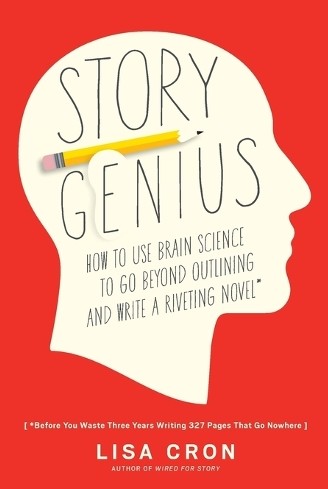
“Following on the heels of Lisa Cron’s breakout first book, Wired for Story, this writing guide reveals how to use cognitive storytelling strategies to build a scene-by-scene blueprint for a riveting story.
It’s every novelist’s greatest fear: pouring their blood, sweat, and tears into writing hundreds of pages only to realize that their story has no sense of urgency, no internal logic, and so is a page one rewrite.
The prevailing wisdom in the writing community is that there are just two ways around this problem: pantsing (winging it) and plotting (focusing on the external plot).
Story coach Lisa Cron has spent her career discovering why these these methods don’t work and coming up with a powerful alternative, based on the science behind what our brains are wired to crave in every story we read (and it’s not what you think).”
The Ultimate Guide to Editing your Novel by Sara Grant
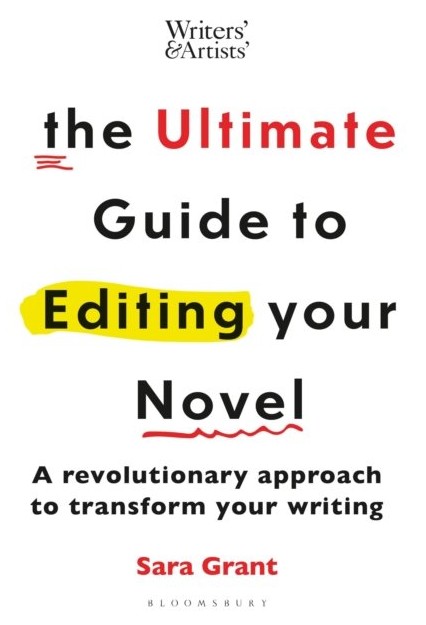
“When it comes to creating children’s and YA fiction there is often a focus on how to start and write until you reach an ending … But what happens when you have a finished manuscript of hundreds of pages? How do you transform your rough draft into a publishable one?
Expert author, editor, mentor and lecturer Sara Grant provides the answer through a systematic approach to editing. Her step-by-step guide demystifies the process of preparing a manuscript for submission to agents and publishers or for those self-publishing. It is a lifeline for new writers and those intimidated by the world of publishing; for more experienced writers it is an invaluable diagnostic tool to dip in and out of.
This practical workbook includes exercises and examples for:
– Interrogating your idea
– Enhancing your plot
– Scrutinising characters, chapters and scenes
– Analysing sentence and word choice
– Honing your unique voice
– Writing with sensitivity for young readers
– And finally, polishing your manuscript for submission.”
On Editing your Novel by Helen Corner-Bryant and Kathryn Price
“Writing a novel is a magical but often difficult journey; and when your first draft is complete, that journey’s not over. As the editing process gets underway, authors often find themselves in unfamiliar territory. What does it mean to ‘map your plot’? How do you know if you’re ‘head-hopping’? When is your novel ready to send out to agents, and how do you make each submission count?
Written by the team behind one of the world’s most successful literary consultancies, On Editing will show you how to master the self-edit. You will learn to compose, draft, and edit while sharpening your writing and ensuring that your novel is structurally sound, authentic, well-written, and ready for submission.
On Editing will help you harness your creative potential, transform the way you think about your writing, and revolutionise your editorial process.”
Self-Editing for Fiction Writers by Renni Browne and Dave King
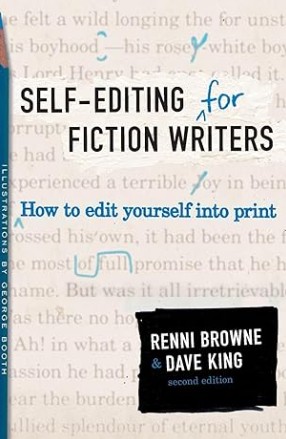
“Hundreds of books have been written on the art of writing. Here at last is a book by two professional editors to teach writers the techniques of the editing trade that turn promising manuscripts into published novels and short stories.
In this completely revised and updated second edition, Renni Browne and Dave King teach you, the writer, how to apply the editing techniques they have developed to your own work.
Chapters on dialogue, exposition, point of view, interior monologue, and other techniques take you through the same processes an expert editor would go through to perfect your manuscript.
Each point is illustrated with examples, many drawn from the hundreds of books Browne and King have edited.”
The Chicago Guide to Copyediting Fiction by Amy J. Schneider
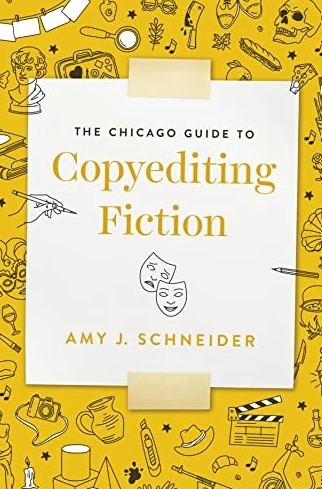
“Although The Chicago Manual of Style is widely used by writers and editors of all stripes, it is primarily concerned with nonfiction, a fact long lamented by the fiction community. In this long-awaited book from the publisher of the Manual, Amy J. Schneider, a veteran copyeditor who’s worked on bestsellers across a wide swath of genres, delivers a companionable editing guide geared specifically toward fiction copyeditors—the first book of its type.
In a series of approachable thematic chapters, Schneider offers cogent advice on how to deal with dialogue, voice, grammar, conscious language, and other significant issues in fiction. She focuses on the copyediting tasks specific to fiction—such as tracking the details of fictional characters, places, and events to ensure continuity across the work—and provides a slew of sharp, practicable solutions drawn from her twenty-five years of experience working for publishers both large and small.
The Chicago Guide to Copyediting Fiction is sure to prove an indispensable companion to The Chicago Manual of Style and a versatile tool for copyeditors working in the multifaceted landscape of contemporary fiction.”
If you’ve found any of these books helpful, please let us know! Additionally, if you’re looking for a beta reader to work with, please visit our Services page to discover ways we can support you on your novel’s path to publication 🙂
Thanks for reading!
Disclaimer: This article does not contain affiliate links.
Leave a Reply