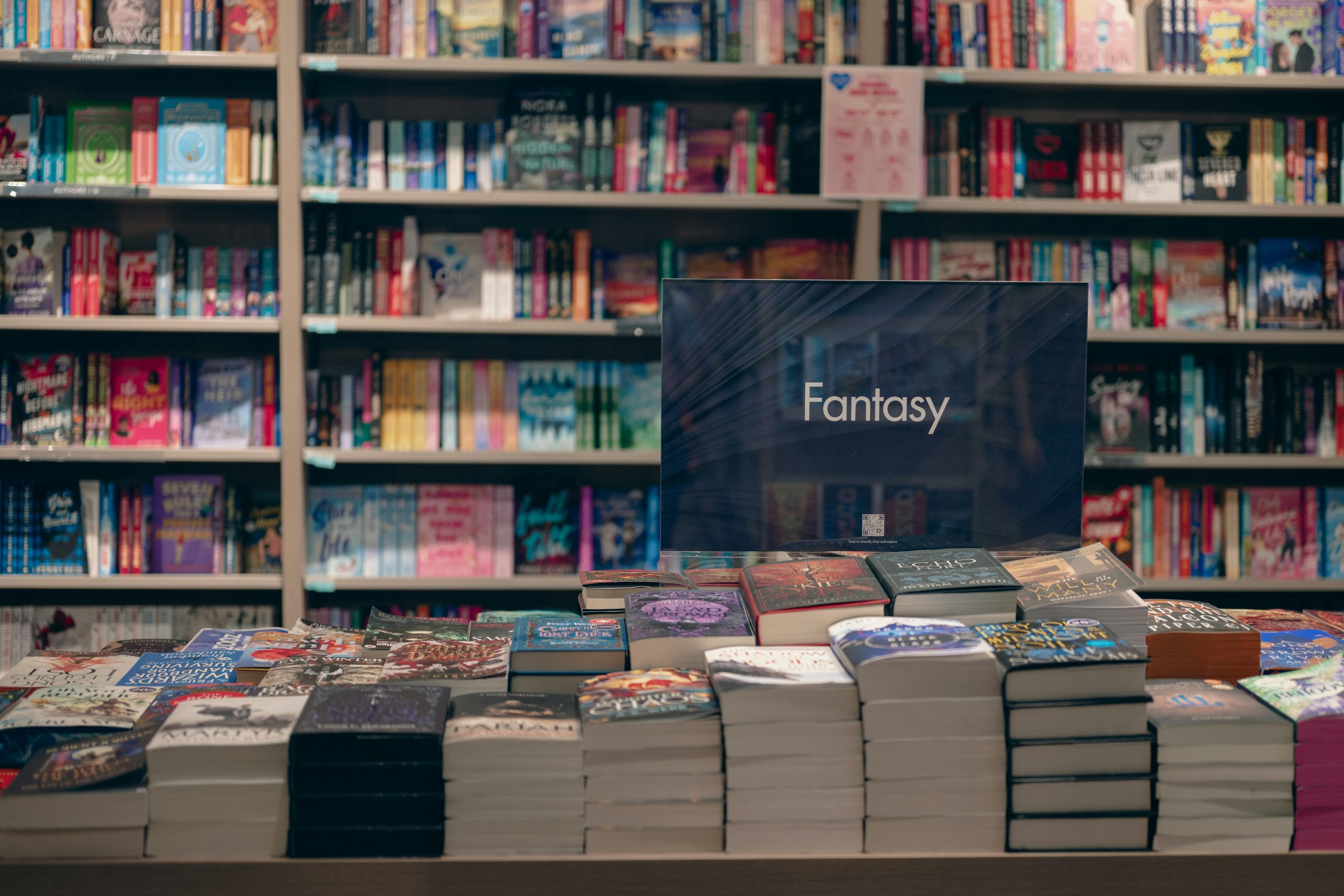
Before we explore the reasons it’s essential to know your book’s genre, let’s take a look at what genre actually is…
In literature, books are classified under different genres to reflect aspects such as theme, structure, and writing style. Through classifying books under a specific genre, or mix of genres, readers can choose books they’re most likely to enjoy.
Genre can also support authors to craft books that align with (or subvert) the conventions of their chosen story type.
For the purposes of this article, we’re not necessarily focusing on the expectations of literature written for younger audiences, including:
- Picture books for readers up to 5 years of age.
- Chapter books for readers between 5 and 8 years of age.
- Middle-grade books for readers between 8 and 12 years of age.
- Young adult books for readers between 12 and 18 years of age.
- New adult books for readers aged 18 to 25+ years.
Without further ado, here are the reasons it’s so important to know your story’s genre as an author…
Reason 1 – To craft a suitable book cover
It may not seem obvious when you first consider the genre of the book you’re writing, but, understanding what elements readers expect to see on a book cover is a vital marketing tool. Designing a stunning book cover that’ll attract readers who’ll enjoy your story is often an underrated aspect of the importance of knowing your novel’s genre(s).
Reason 2 – To understand audience expectations
Many readers have specific expectations when they pick up a book of a particular genre. If you read the 1- or 2-star reviews of your favourite books, you’re likely to find that most readers who didn’t enjoy those stories struggled with them because they felt misled in terms of genre expectations.
An alternative perspective is that you’ll only be able to subvert genre expectations in satisfying ways if you know what readers expect from a story!
Reason 3 – To help you overcome writer’s block
Knowing the structure of stories that fall into specific genres can help to carve a path out of writer’s block, since having a framework is an effective way to work out what to write next.
What to expect from novels within these popular genres
** Please note, the following does not represent an exhaustive list and doesn’t reflect the fact that many books are a mix of genres (e.g. rom-com, historical romance, romantasy, etc.). **
Romance = love is the major theme; emotive storytelling; much-loved tropes like ‘enemies to lovers’, ‘love triangle’, and ‘fake dating’; often told from a singular or dual perspective.
Historical fiction = thoroughly researched, vivid settings; the exploration of an era from the past; themes such as life during wartime and overcoming class or gender discrimination.
Fantasy = usually of epic scope with in-depth worldbuilding; diverse cast of characters; tropes such as ‘the chosen one’, ‘good vs. evil’, and ‘unexpected heir to the kingdom’.
Science fiction = immersive worldbuilding; futuristic elements, usually involving technology; plots with human stories at their core; the, often, complex exploration of a “what if” question.
Thriller = a central problem for the protagonist to solve; life and death stakes; plenty of suspense and tension; blurring the lines between good and evil.
Cosy mystery = quaint or familiar settings; often, an ordinary person becomes a sleuth (i.e. the main character tends not to be a trained detective); no graphic content; usually written in a light-hearted tone.
Women’s fiction = female protagonist(s); character-driven storylines; navigating a range of themes including identity, relationships, and personal growth; lots of interiority.
Horror = life vs. death stakes, when death often wins; fear-driven scenarios; facing the unknown; traumatic events.
Action/adventure = high stakes; heroism; a fast-paced writing style; facing obstacles, with successes and failures.
Literary fiction = experimental stories that don’t necessarily adhere to conventional plot structure or character arcs; a focus on writing style/language over plot; an emphasis on navigating complex human experiences.
Under the Horseshoe Books imprint, we publish books in a range of genres. To explore our titles, please visit our Books page 🙂
Thanks for reading!
Leave a Reply